2020 國家婦女館常設展
Taiwan Woman’s Center Permanent Exhibition
item
展場平面設計、摺頁設計 Exhibition & Brochure Design
design
Aki YJ Chen
illustration
Aki YJ Chen、林思妤
client
台灣國家婦女館 Taiwan Woman’s Center
photography
Philip Lin, 58kg
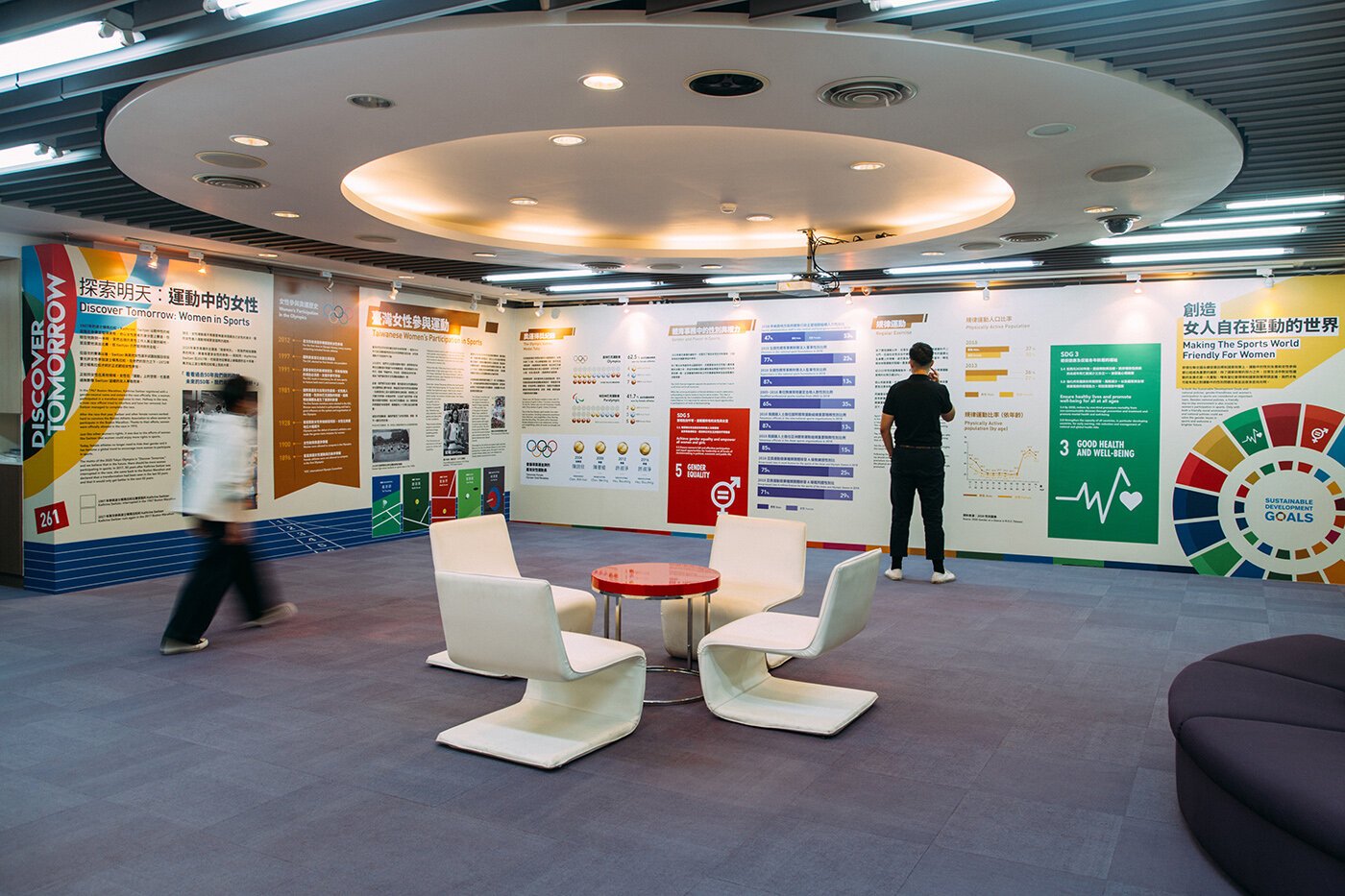
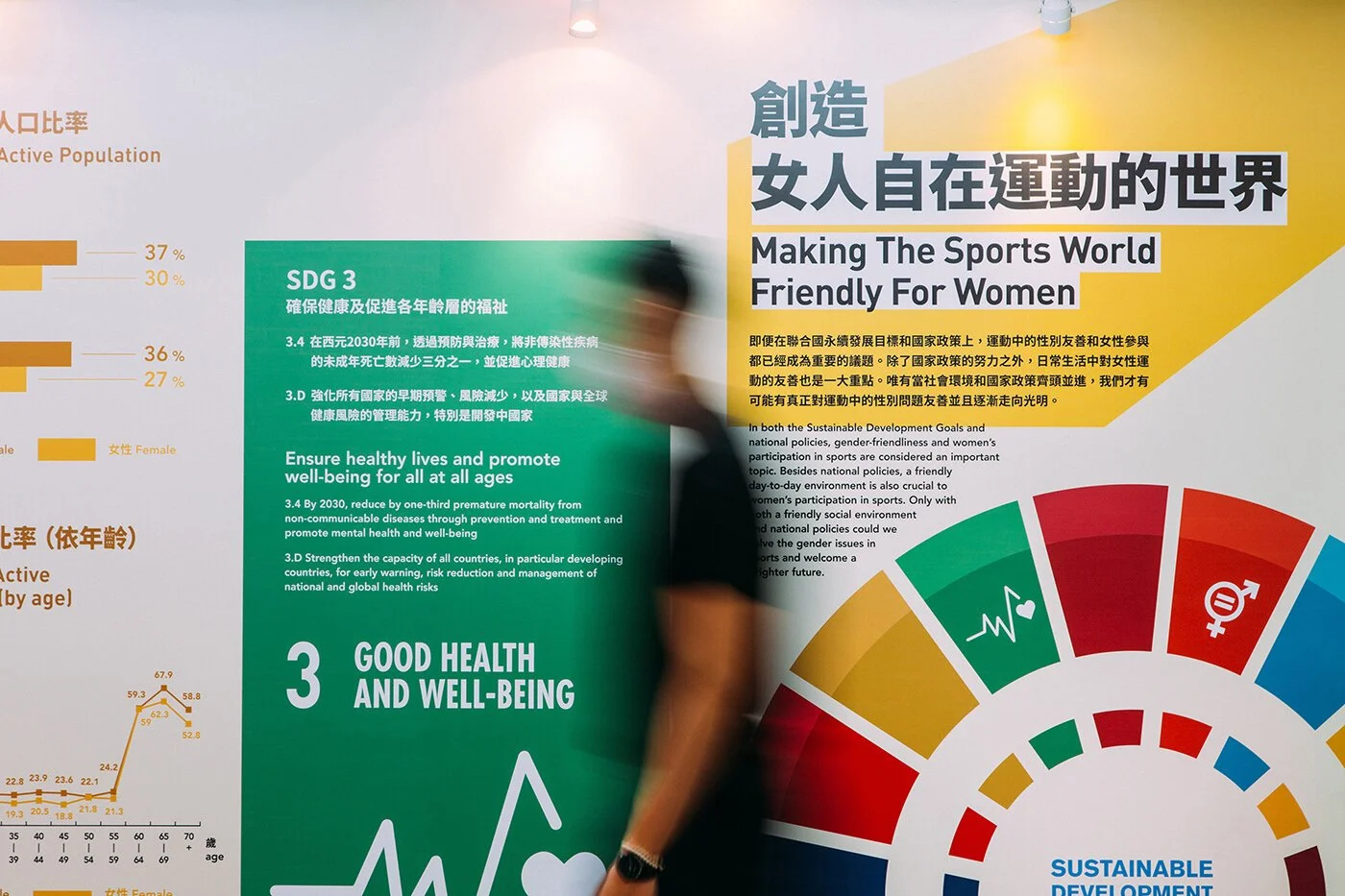
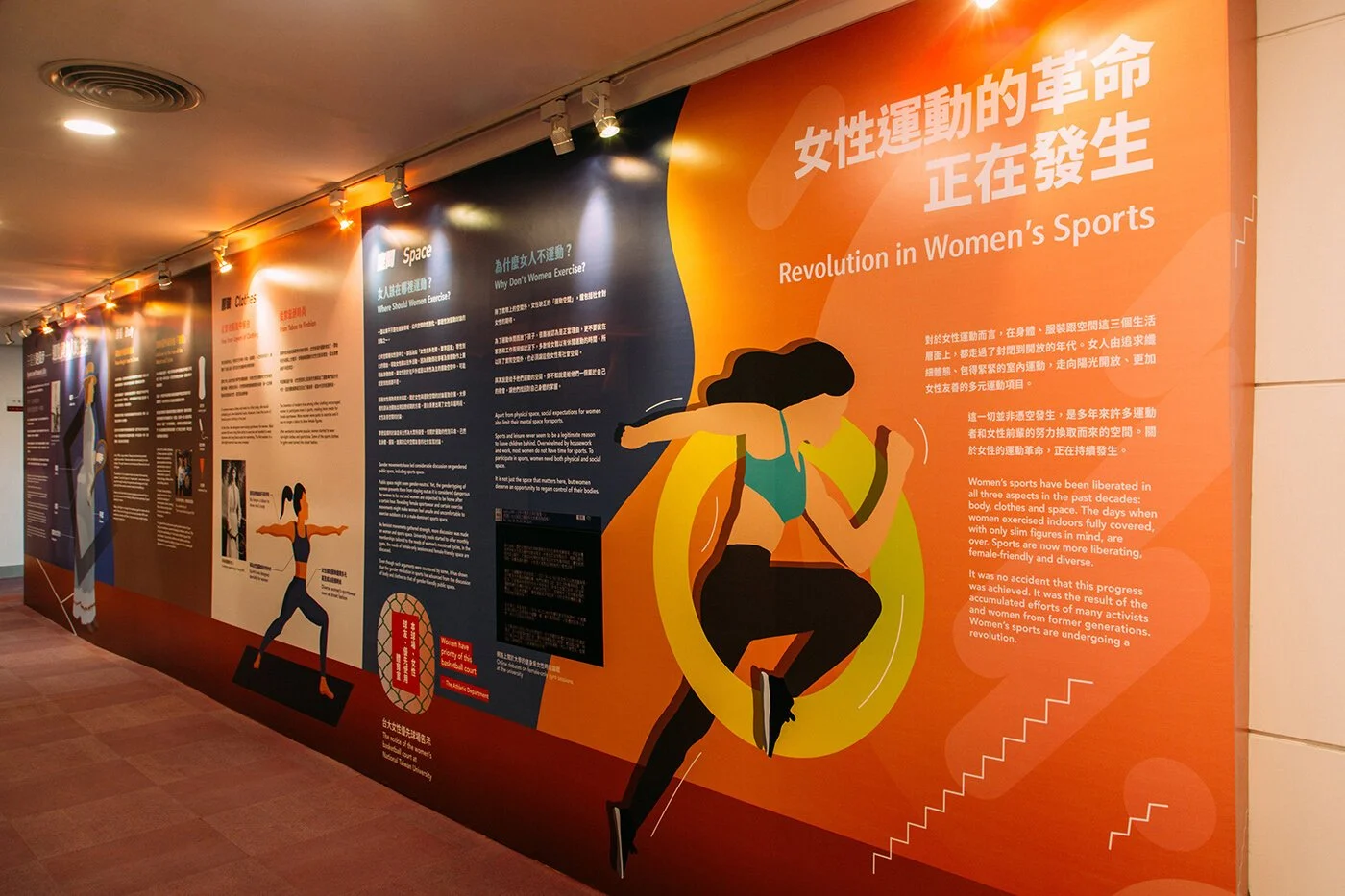
從三個角度探討女性的空間
1 / 探索明天:運動中的女性
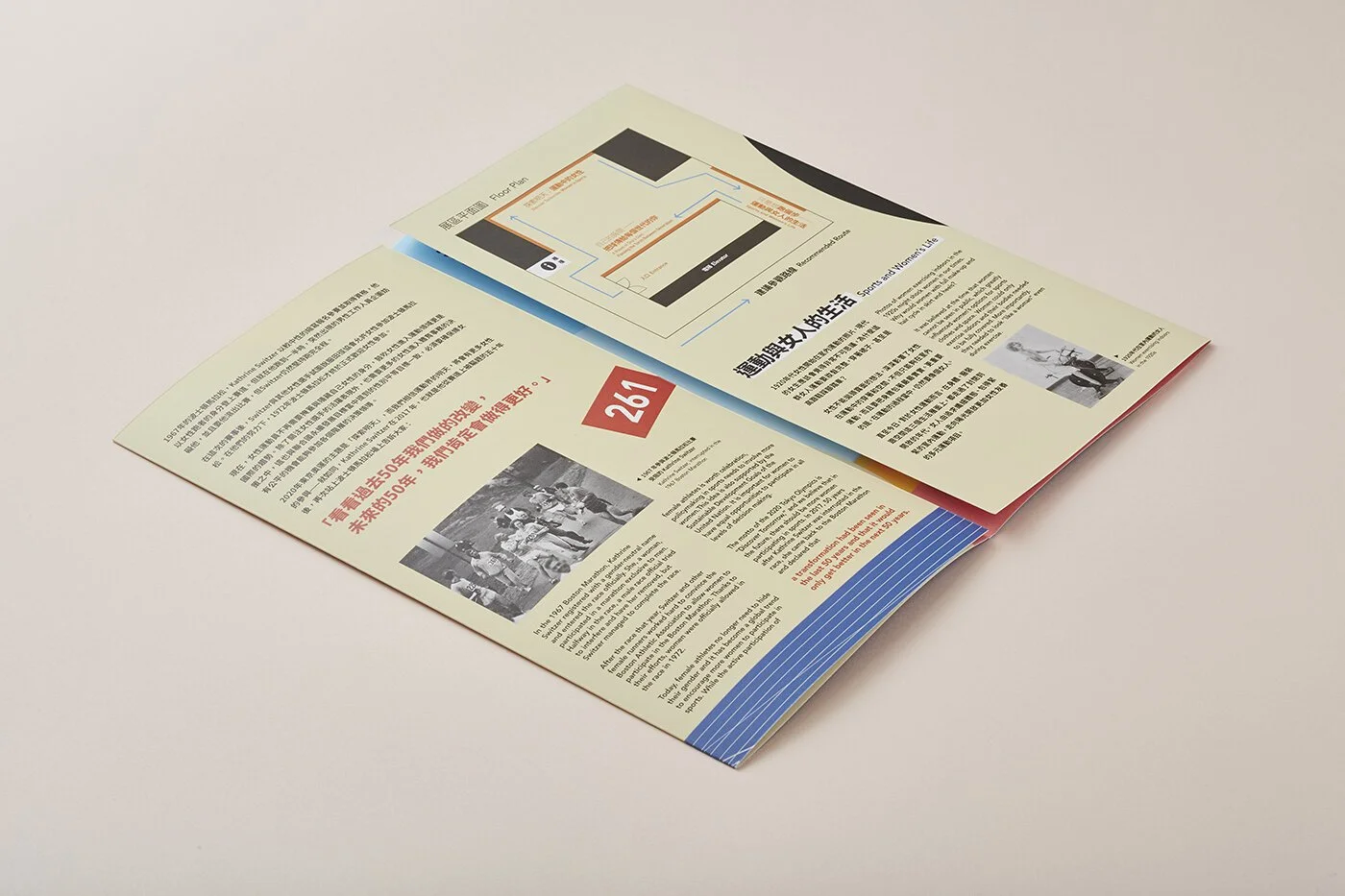
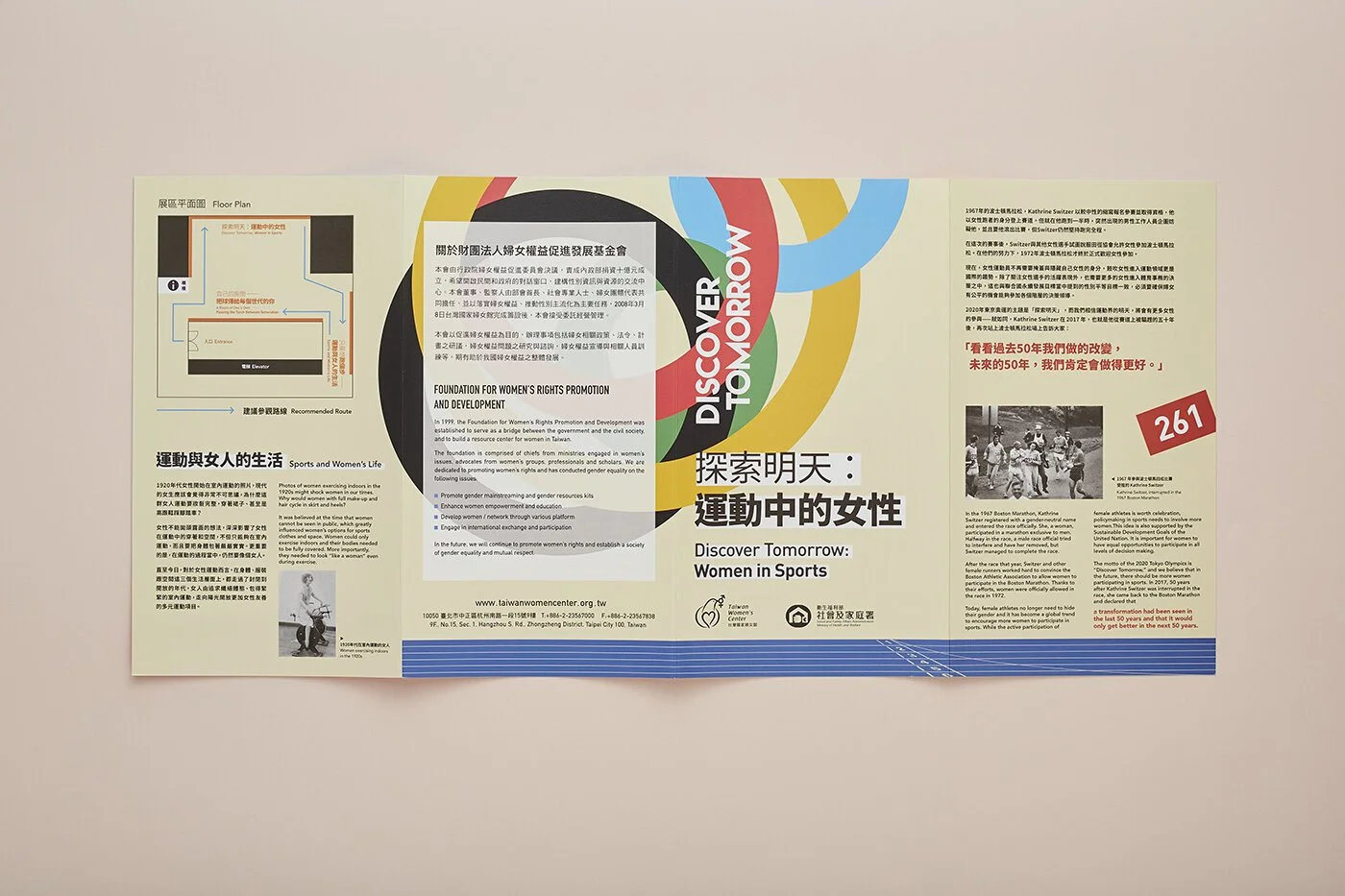
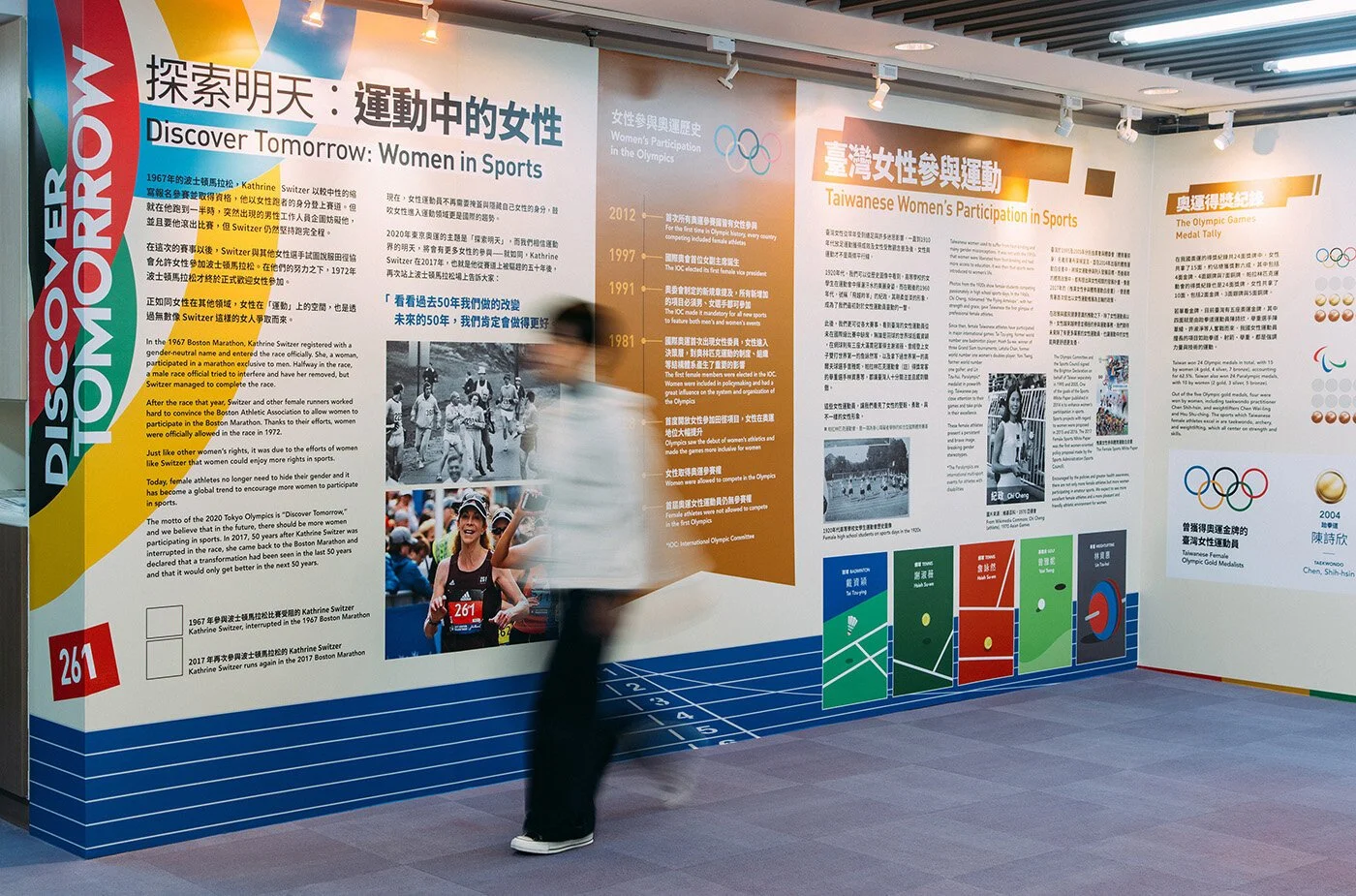
1967 年的波士頓馬拉松,Kathrine Switzer 以較中性的縮寫報名參賽並取得資格,他以女性跑者的身分登上賽道。但就在他跑到一半時,突然出現的男性工作人員企圖妨礙他,並且要他滾出比賽。經過不斷努力,#1972年波士頓馬拉松才終於正式歡迎女性參加。
正如同女性在其他領域,女性在「運動」上的空間,也是透過無數像 Switzer 這樣的女人爭取而來。
2020 東京奧運的主題是「探索明天」,而我們相信運動界的明天,將會有更多女性的參與——就如同,Kathrine Switzer 在 2017 年,也就是他從賽道上被驅趕的五十年後,再次站上波士頓馬拉松場上告訴大家:「看看過去 50年我們做的改變,未來的 50 年,我們肯定會做得更好。」
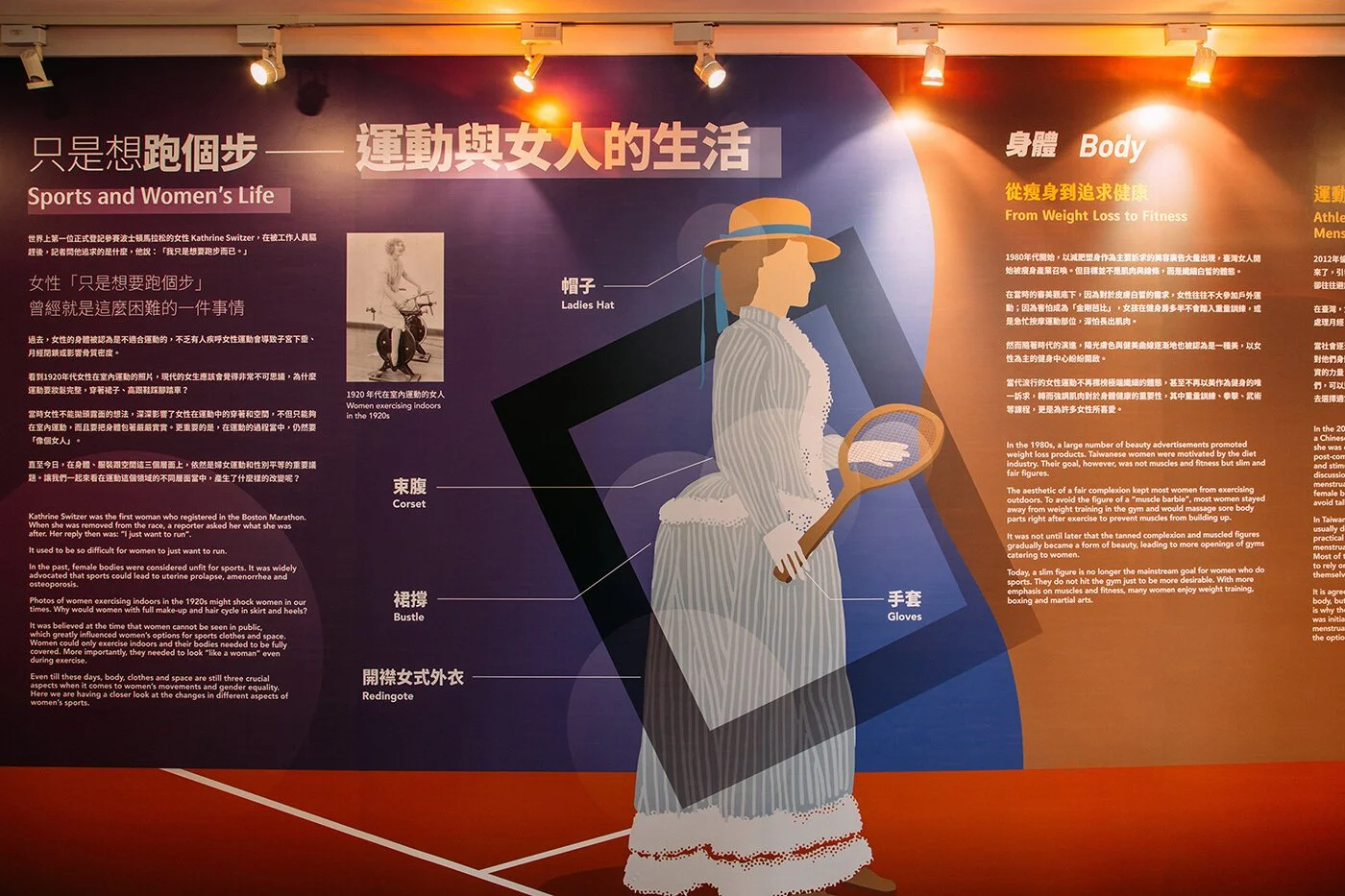
2 / 運動與女人的生活
過去,女性的身體被認為是不適合運動的,不乏有人疾呼女性運動會導致子宮下垂、月經閉鎖或影響骨質密度。
看到 1920 年代女性在室內運動的照片,現代的女生應該會覺得非常不可思議,為什麼運動要妝髮完整,穿著裙子、高跟鞋踩腳踏車?
當時女性不能拋頭露面的想法,深深影響了女性在運動中的穿著和空間,不但只能夠在室內運動,而且要把身體包著嚴嚴實實。更重要的是,在運動的過程當中,仍然要 #像個女人。
直至今日,在身體、服裝跟空間這三個層面上,依然是婦女運動和性別平等的重要議題。在運動這個領域的不同層面當中,產生了什麼改變呢?
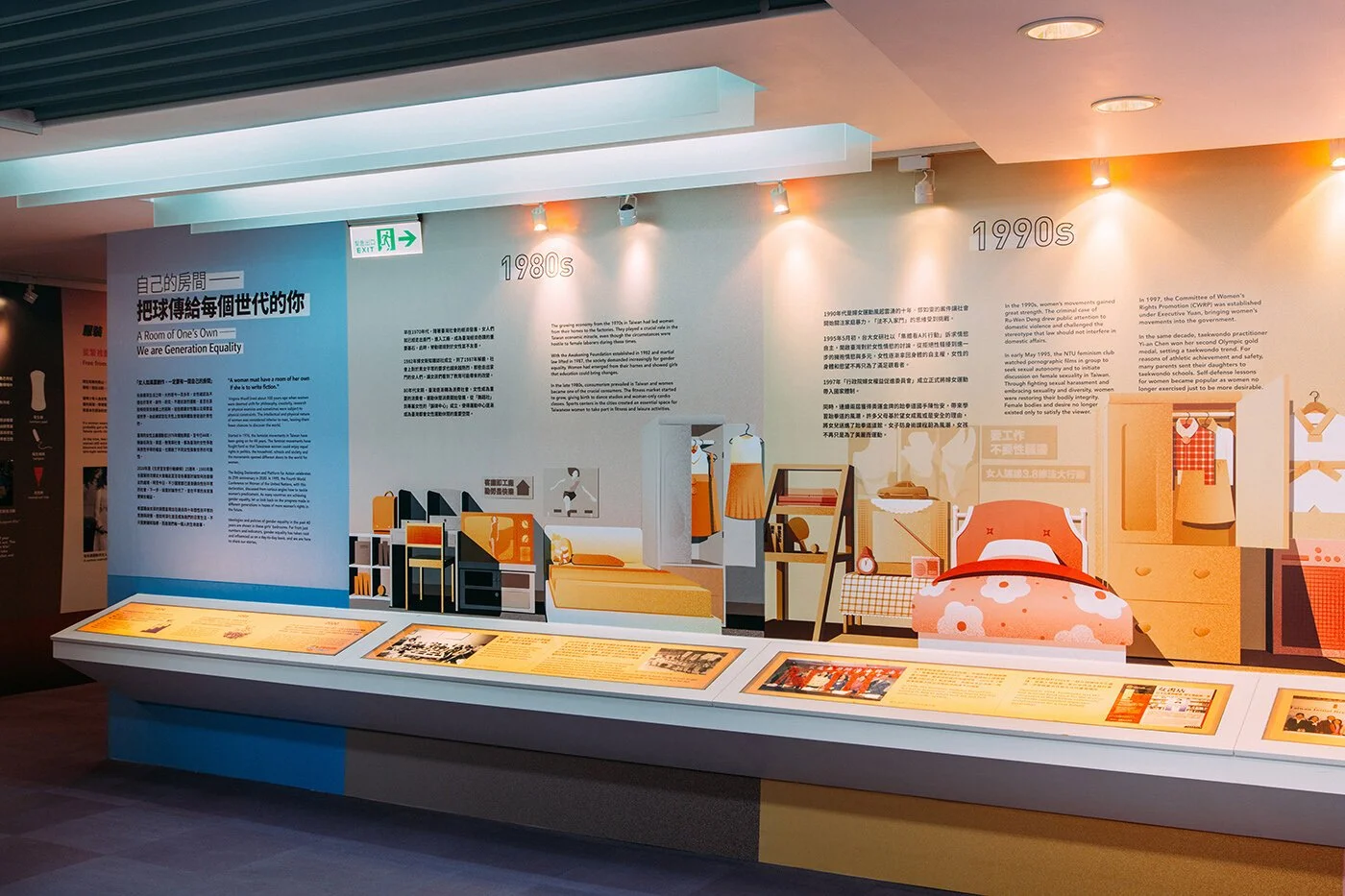
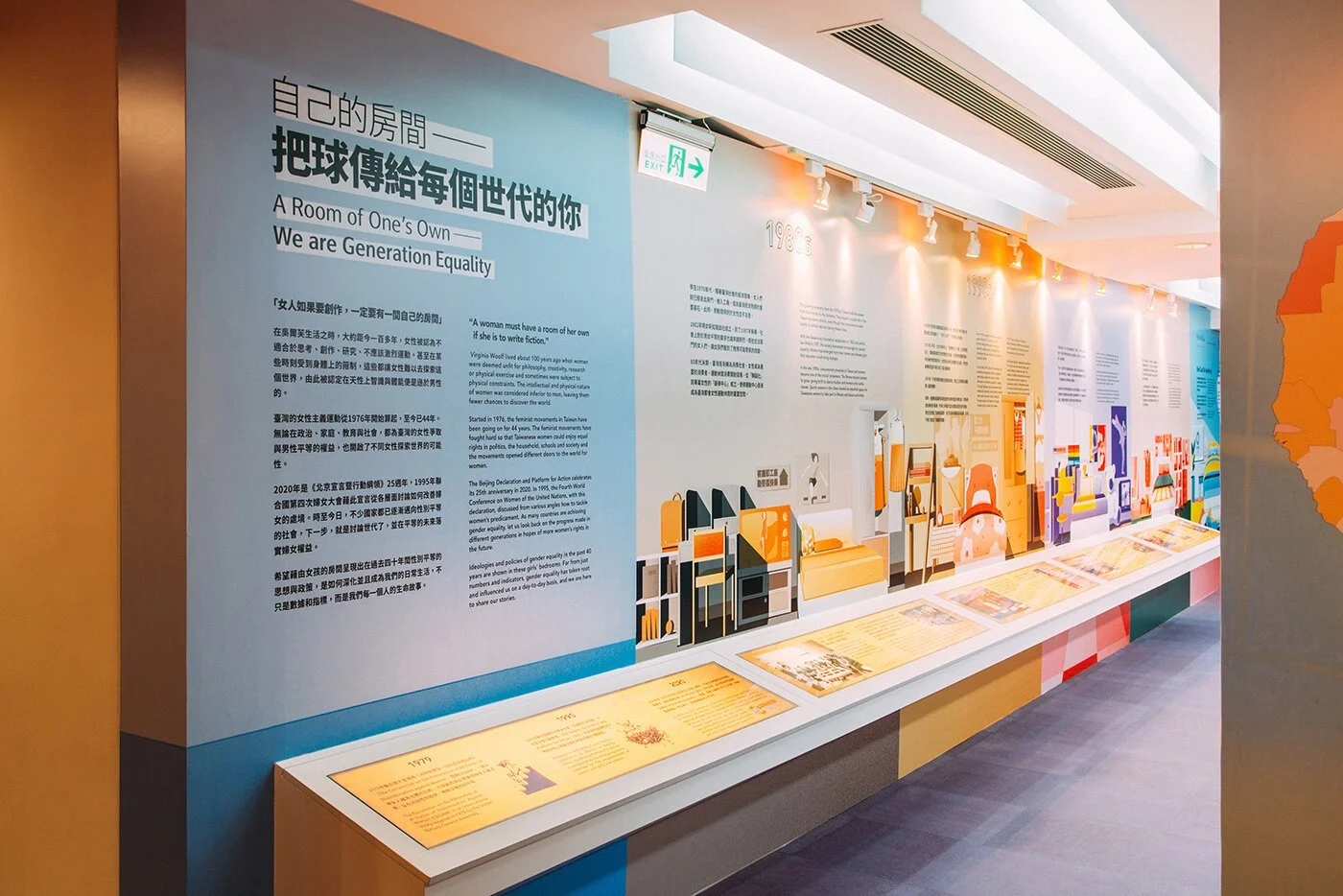
3 / 自己的房間—把球傳給每個世代的你
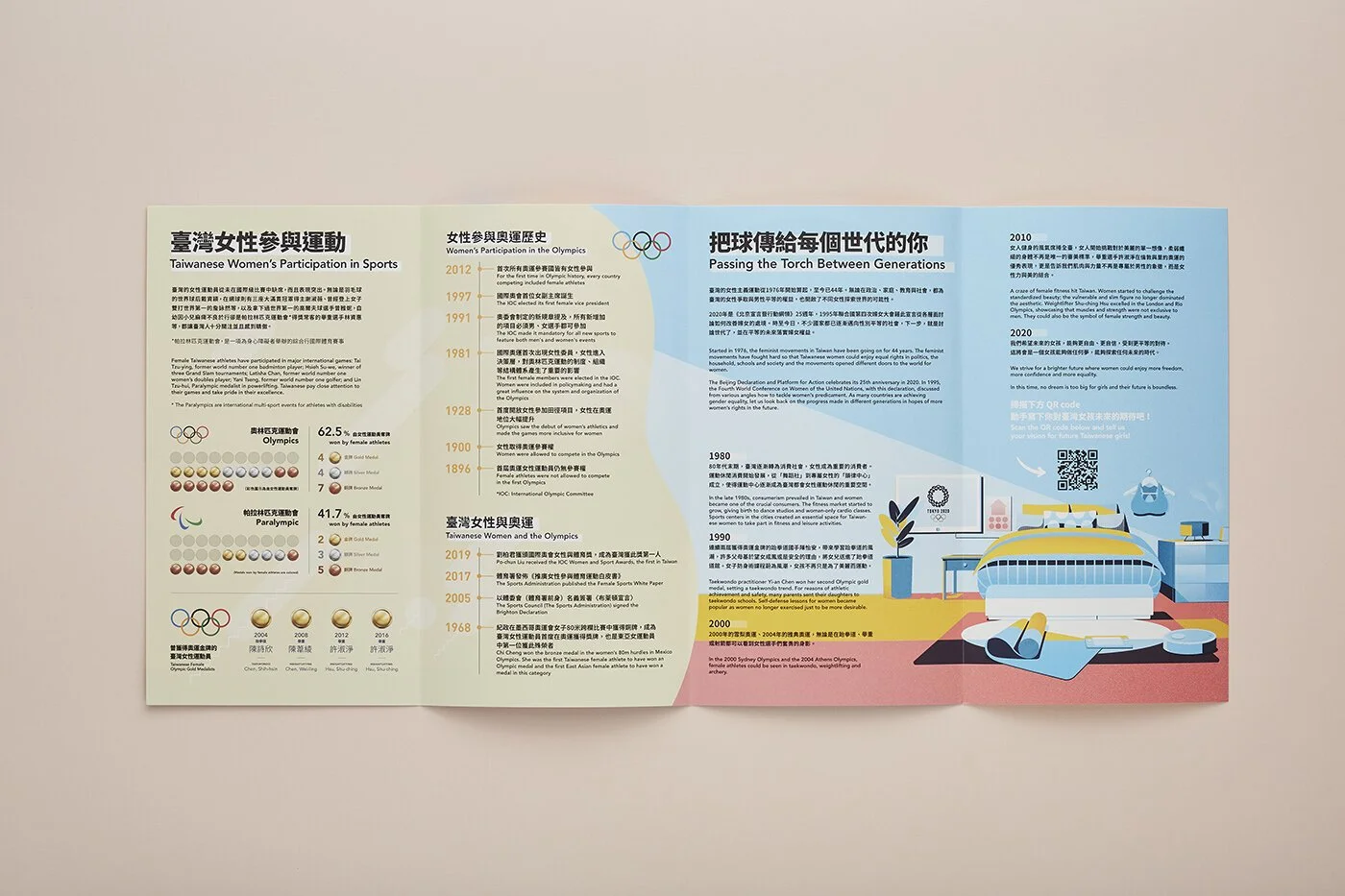
「女人如果要創作,一定要有一間自己的房間」,在吳爾芙生活之時,大約距今一百多年,女性被認為不適合於思考、創作、研究、不應該激烈運動,甚至在某些時刻受到身體上的箝制,這些都讓女性難以去探索這個世界,由此 #被認定在天性上智識與體能便是遜於男性的。
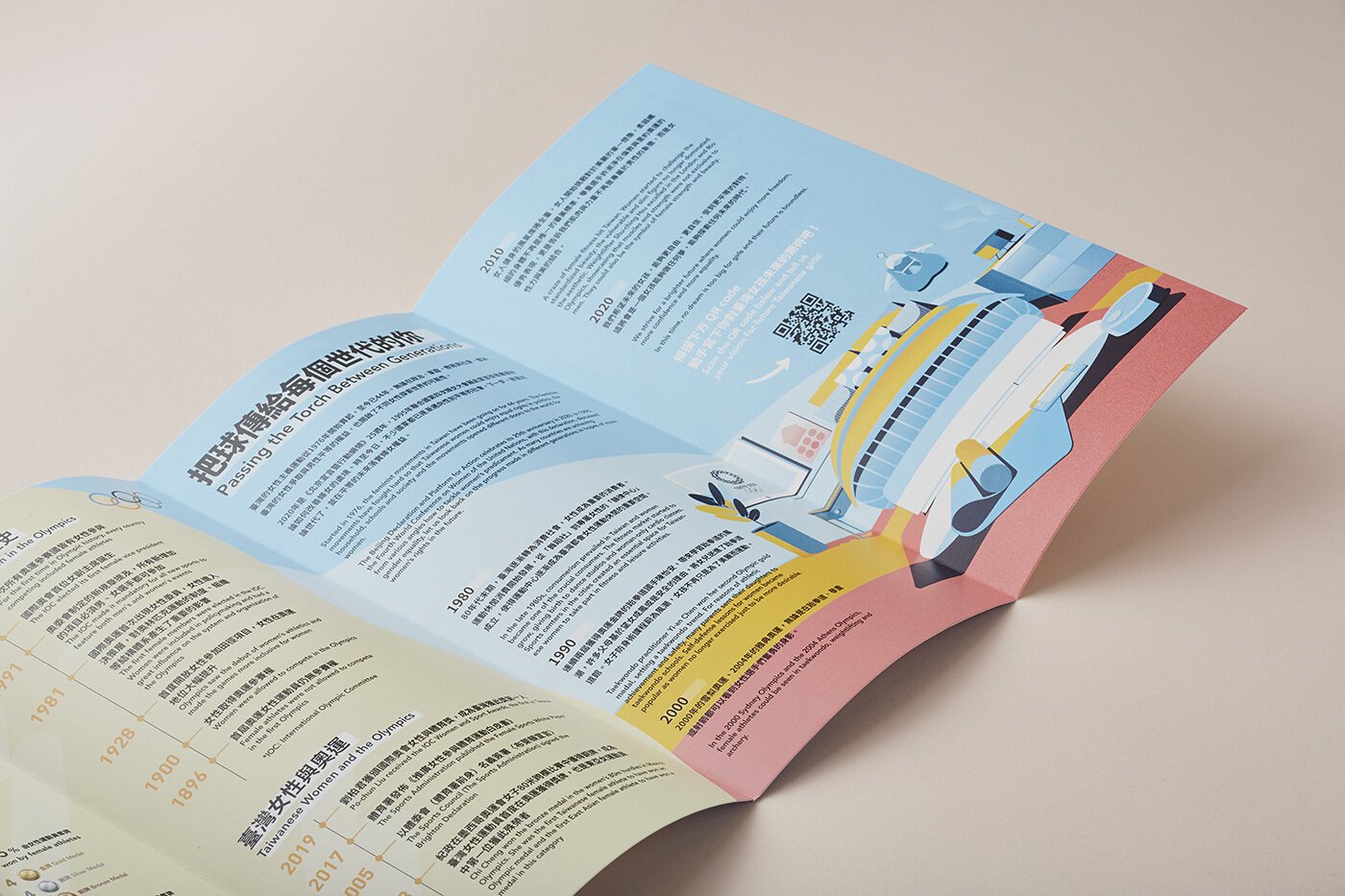
臺灣的女性主義運動從 1976 年開始算起,至今已 44 年。無論在政治、家庭、教育與社會,都為臺灣的女性爭取與男性平等的權益,也開啟了不同女性探索世界的可能性。
觀音摺 55 x 25 cm
恆成紙業 / 凝雪映畫 170g 雙面上油
Exploring Women’s Space from Three Perspectives
1 / Exploring Tomorrow: Women in Motion
At the 1967 Boston Marathon, Kathrine Switzer registered under a gender-neutral abbreviation and officially qualified for the race. As a woman runner, she stepped onto the course—only to be confronted mid-race by a male official who attempted to physically remove her and demanded that she leave the competition. It was not until 1972 that the Boston Marathon formally opened participation to women.
As in many other fields, women’s space in sports has been claimed through the persistent efforts of countless women like Switzer.
The theme of the Tokyo 2020 Olympic Games was “Exploring Tomorrow.” We believe that the future of sports will see greater participation by women. This belief was powerfully echoed in 2017, fifty years after being forced off the course, when Kathrine Switzer returned to the Boston Marathon and declared:
“Look at what we’ve changed in the last 50 years. In the next 50, we will do even better.”
2 / Sports and Women’s Everyday Lives
In the past, women’s bodies were widely considered unsuitable for physical activity. Claims circulated that exercise could cause uterine prolapse, menstrual disruption, or damage bone density.
Photographs from the 1920s showing women exercising indoors may appear almost surreal to contemporary viewers: why did women need full makeup, skirts, and even high heels to ride bicycles?
The belief that women should not appear in public deeply shaped how women dressed, moved, and occupied space in sports. They were confined to indoor settings, their bodies fully covered—and, above all, expected to “behave like women” even while exercising.
To this day, body, clothing, and space remain central issues in women’s sports and gender equality. Across different dimensions of sport, what changes have taken place—and which challenges persist?
3 / A Room of One’s Own: Passing the Ball to Every Generation
“A woman must have money and a room of her own if she is to write.”
When Virginia Woolf wrote these words over a century ago, women were widely regarded as unfit for thinking, creating, researching, or engaging in intense physical activity. In some cases, they were even physically restrained. Such constraints made it difficult for women to explore the world and reinforced the belief that women were inherently inferior to men in intellect and physical capability.
Taiwan’s feminist movement is commonly traced back to 1976, marking over four decades of advocacy. Across politics, family life, education, and society, women have fought for equal rights with men—opening new possibilities for women to explore the world in their own ways.
Format: Accordion fold
Size: 55 × 25 cm
Paper: Huncheng Paper – Ningxue Yinghua 170 gsm
Finishing: Double-sided coating